The Hidden Struggles Behind Herman Munster: How Fred Gwynne Endured One of Television’s Most Uncomfortable Costumes
Millions of television viewers remember Herman Munster as the lovable, towering father with a square-shaped head, oversized boots, and an unforgettable smile.
But behind the laughter and memorable appearances was an actor facing an exhausting physical challenge.
Fred Gwynne, the talented performer who brought Herman Munster to life in the classic television series The Munsters, endured hours of heavy makeup, restrictive clothing, and uncomfortable footwear to create one of the most recognisable characters in television history.
While audiences saw a friendly monster, Gwynne experienced the demanding reality of transforming into him.
The Man Behind the Famous Monster
When The Munsters premiered in September 1964, American television audiences were introduced to a family unlike any other.
The sitcom combined traditional family comedy with characters inspired by classic horror films.
At the centre of the show was Herman Munster, a gentle and often confused family man whose appearance resembled Frankenstein’s monster.
Fred Gwynne was already an experienced actor, but the role would become one of his most famous performances.
Standing approximately 6 feet 5 inches tall, Gwynne was naturally imposing.
However, the production team wanted Herman to appear even larger and more exaggerated.
Achieving that look required a costume that was far more complicated than it appeared on television.
The Enormous Boots That Made Walking Difficult
One of the most distinctive parts of Herman Munster’s appearance was his enormous footwear.
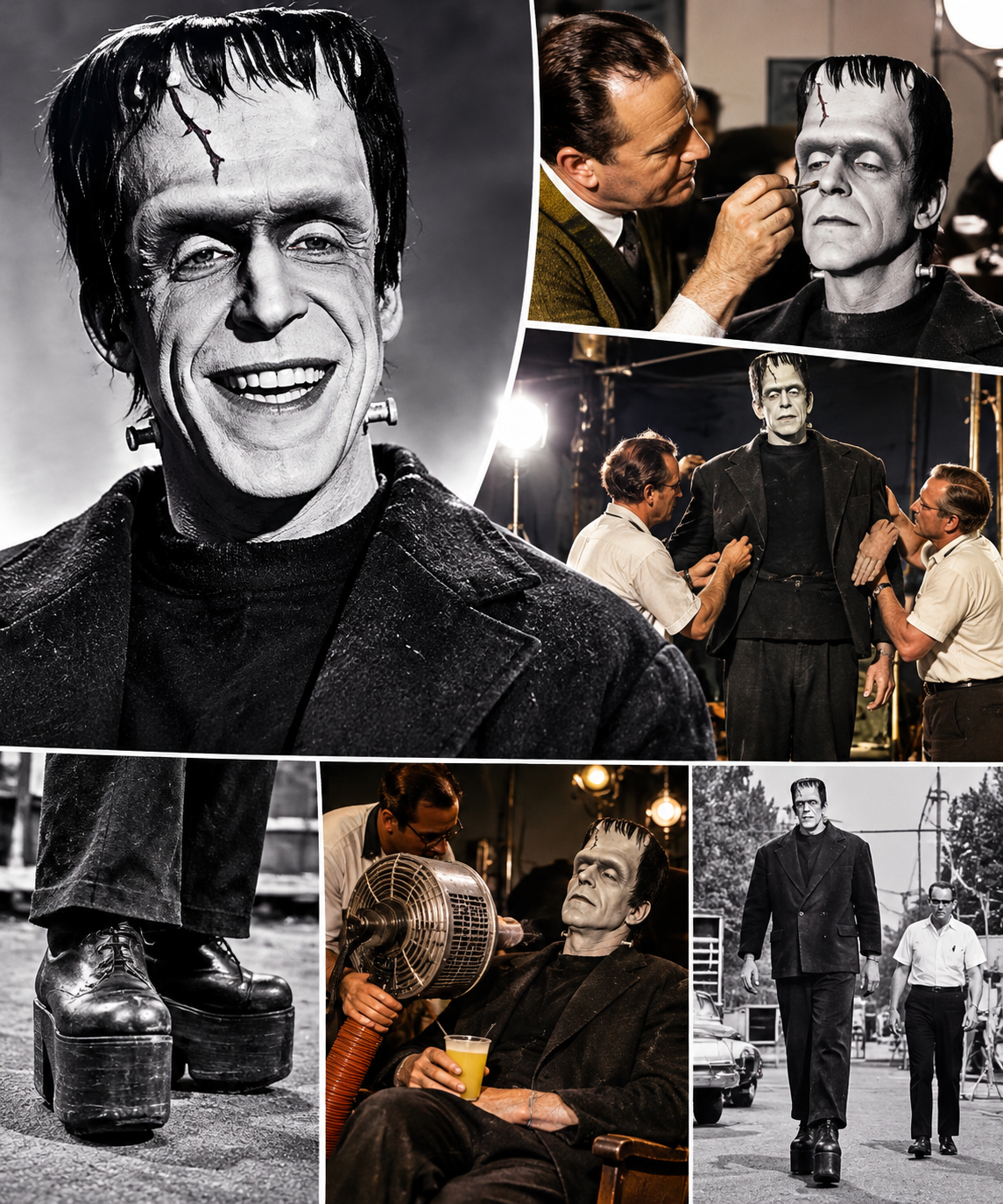
The production team used specially modified boots with thick elevated soles to increase Gwynne’s height.
These heavy shoes helped create Herman’s awkward, lumbering walk.
But wearing them for extended periods was physically demanding.
Ordinary movements became more difficult, particularly during scenes requiring repeated walking, turning, or standing.
Gwynne had to remain aware of his balance while delivering dialogue and performing comedy.
What looked like a naturally amusing monster’s walk was partly the result of carefully managing cumbersome footwear.
The Heavy Padding Beneath the Costume
Herman Munster’s unusually broad shoulders and large body were not simply the result of Gwynne’s natural physique.
Costume designers used foam padding to exaggerate his proportions.
The additional material helped transform the actor into the oversized character viewers recognised immediately.
However, the padding also trapped heat.
Under powerful studio lights, the costume could become extremely uncomfortable.
Gwynne had to perform lengthy scenes while wearing layers of material that restricted airflow.
And because television production often required multiple takes, he could spend considerable time inside the costume before getting a proper break.
The Heat That Became a Serious Challenge
One of the most widely repeated behind-the-scenes stories about The Munsters concerns the intense heat Gwynne experienced while filming.
Reports describe him sweating heavily beneath the makeup and padded costume.
Some accounts claim he lost around ten pounds during the first season because of the demanding working conditions.
Although that exact figure is difficult to independently verify, the discomfort associated with the costume has become a well-known part of the show’s production history.
The crew reportedly used compressed air to help cool Gwynne between takes.
Cold air could be directed inside the costume to provide temporary relief.
It was an unusual solution to an unusual problem.
For the actor, even a few moments of cooler air could make the difference between an exhausting scene and a manageable one.
Makeup That Required Patience and Endurance
The costume was only one part of Gwynne’s transformation.
Herman’s appearance also depended on carefully applied makeup.
His pale complexion, exaggerated facial structure, distinctive hairline, and neck bolts all contributed to the character’s famous look.
Creating this appearance required preparation before filming could begin.
Once the makeup was applied, Gwynne had to maintain his performance without disturbing the carefully constructed design.
Facial expressions were especially important.
Despite the heavy makeup, he needed to communicate confusion, affection, embarrassment, and excitement.
His ability to make Herman emotionally expressive helped turn a potentially frightening character into a beloved television father.
Why Herman Munster Became So Popular
The brilliance of Fred Gwynne’s performance was not simply that he looked like a monster.
It was that he made audiences forget the costume.
Herman was physically enormous but emotionally gentle.
He loved his wife, Lily, cared deeply about his family, and frequently found himself confused by everyday situations.
His innocence was central to the comedy.
Rather than portraying Herman as a threatening creature, Gwynne gave him warmth and vulnerability.
His deep voice, expressive reactions, and carefully timed humour made the character memorable.
The contrast between Herman’s frightening appearance and his kind personality became one of the show’s greatest strengths.
The Physical Price of Television Comedy
Television audiences rarely see the difficult work behind elaborate character costumes.
For Gwynne, performing as Herman meant combining acting with physical endurance.
The heavy footwear affected his movements.
The padding made the costume hot.
The makeup required preparation and careful maintenance.
Yet he still had to deliver an energetic comedic performance.
His work illustrates how demanding character acting could be during the early years of television production.
Long before modern lightweight costume materials and advanced cooling systems became more widely available, performers often had to work around significant practical limitations.
Life After The Munsters
The Munsters originally aired from 1964 to 1966, producing 70 episodes across two seasons.
Although its original television run was relatively short, the programme gained a lasting following through reruns.
Fred Gwynne continued working as an actor after the series ended.
He appeared in theatre, film, and television, demonstrating that his abilities extended far beyond the Herman Munster character.
Later audiences also remember his performances in films such as Pet Sematary and My Cousin Vinny.
Gwynne died in 1993, leaving behind a diverse body of work.
Yet Herman Munster remains one of his most enduring cultural contributions.
The Legacy Behind the Monster Makeup
Decades after The Munsters first appeared on television, Herman Munster remains instantly recognisable.
His oversized shoes, square head, and unmistakable smile have become part of classic American television imagery.
But the character’s lasting appeal came from something more meaningful than his unusual appearance.
Fred Gwynne brought humanity to a character designed to look inhuman.
He transformed an elaborate costume into a believable personality and gave audiences a monster they could genuinely love.
Behind every laugh was preparation, patience, and considerable physical effort.
The next time someone watches Herman Munster walk across the screen, it is worth remembering that the funny, awkward movements were performed by a real actor carrying the weight of an extraordinary costume.
And that dedication helped turn a television character into an unforgettable legend.