Why Is Burj Khalifa’s Future in Danger?
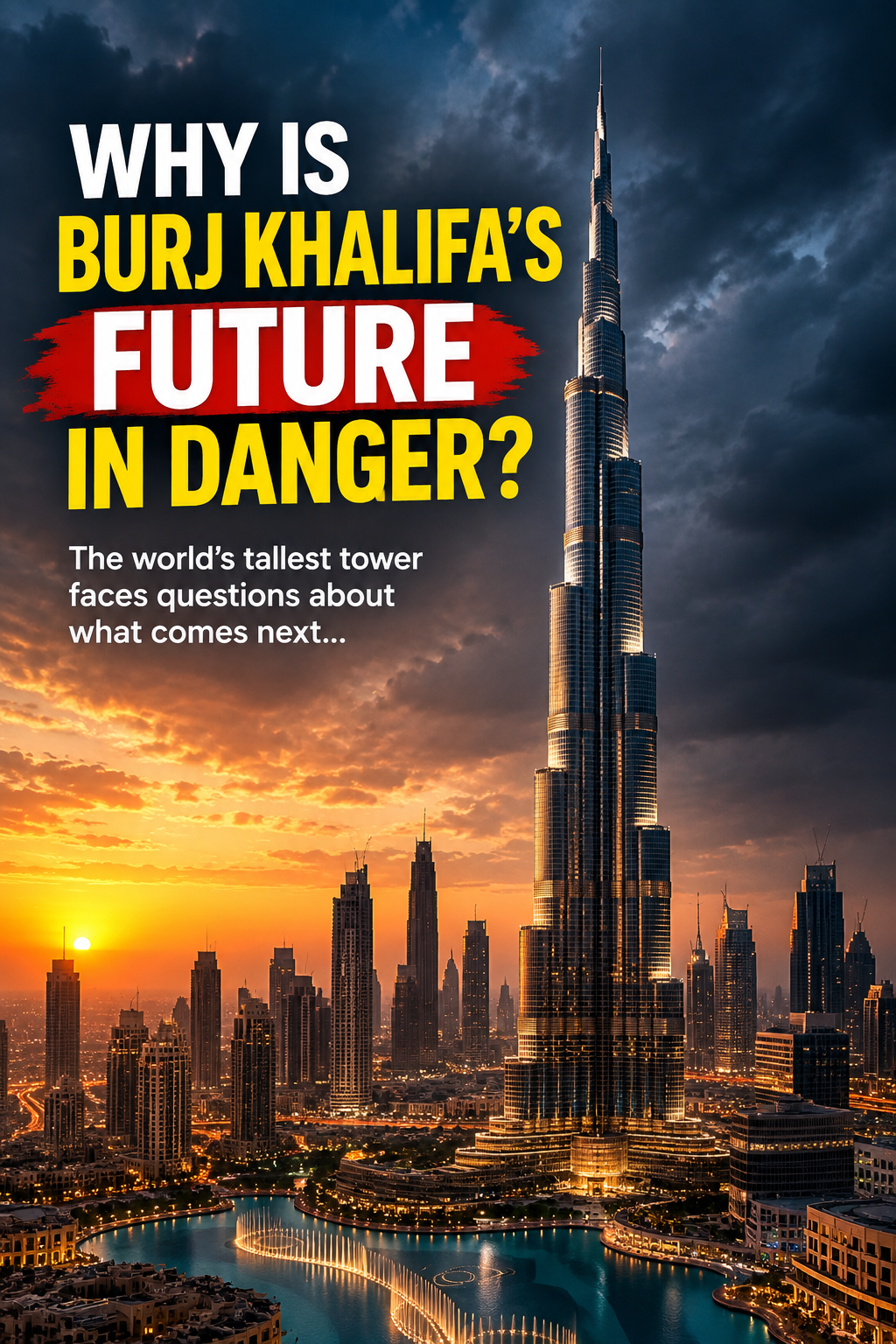
The Burj Khalifa has become one of the most recognizable landmarks in the world. Standing at more than 828 metres, the skyscraper transformed Dubai’s skyline and became a powerful symbol of the city’s ambition and rapid development.
But as Dubai continues to grow, questions are increasingly being raised about the building’s long-term future. What happens when a structure of this scale becomes older, while newer and even more ambitious skyscrapers are being planned?
The Burj Khalifa faces several long-term challenges. Maintaining a supertall building requires enormous amounts of engineering, energy, cleaning, maintenance and investment. Its elevators, mechanical systems, glass façade and other infrastructure must continue to operate safely for decades.
Another issue is competition. Dubai is famous for constantly pushing architectural boundaries, and future projects could eventually challenge the Burj Khalifa’s position as the city’s most spectacular landmark. A taller building or a new architectural icon could change how the world views Dubai’s skyline.
However, this does not necessarily mean that the Burj Khalifa is actually in danger of disappearing. Iconic buildings can remain important for generations when they are properly maintained, modernized and given new uses.
The real question is not simply whether the Burj Khalifa will remain standing. It is whether it can continue to remain relevant, attractive and economically important as Dubai enters its next era of development.
For now, the Burj Khalifa remains an extraordinary achievement and one of the most famous buildings ever constructed. Its future will depend on how successfully Dubai preserves this landmark while continuing to build the future around it.
The Burj Khalifa may have reached the top—but keeping its place at the top could be the next great challenge.